The modern Birkin has spent years being treated like a museum object: pristine, upright, photographed carefully, protected from rain, and discussed in the language of resale value. But the latest bag-charm revival is pulling the Birkin back toward something more personal and historically authentic.
The irony is that the most “correct” way to style a Birkin may not be the most polished way. It may be the most lived-in.
Jane Birkin did not treat the bag as an untouchable trophy. She made it useful, recognizable, imperfect, and unmistakably hers. That spirit is now returning through charms, scarves, keychains, beauty trinkets, plush objects, initials, mirrors, perfume minis, and sentimental add-ons. The trend is playful, but it is not superficial. It is a rejection of sterile luxury and a return to fashion as autobiography.
The most valuable version of luxury is not always the most pristine. Sometimes it is the one with the most evidence of a life.
Jane Birkin did it first
The original Birkin story matters because it was never only about status. The bag was born from utility: a woman needed something capacious, chic, and workable for real life. In 2025, the original Hermès Birkin prototype made for Jane Birkin sold at Sotheby's in Paris for €8.6 million, about $10.1 million with fees. Coverage of the sale highlighted details that make the prototype feel personal rather than pristine, including scuffs, use marks, a nonremovable shoulder strap, and even a nail clipper attached to the bag.
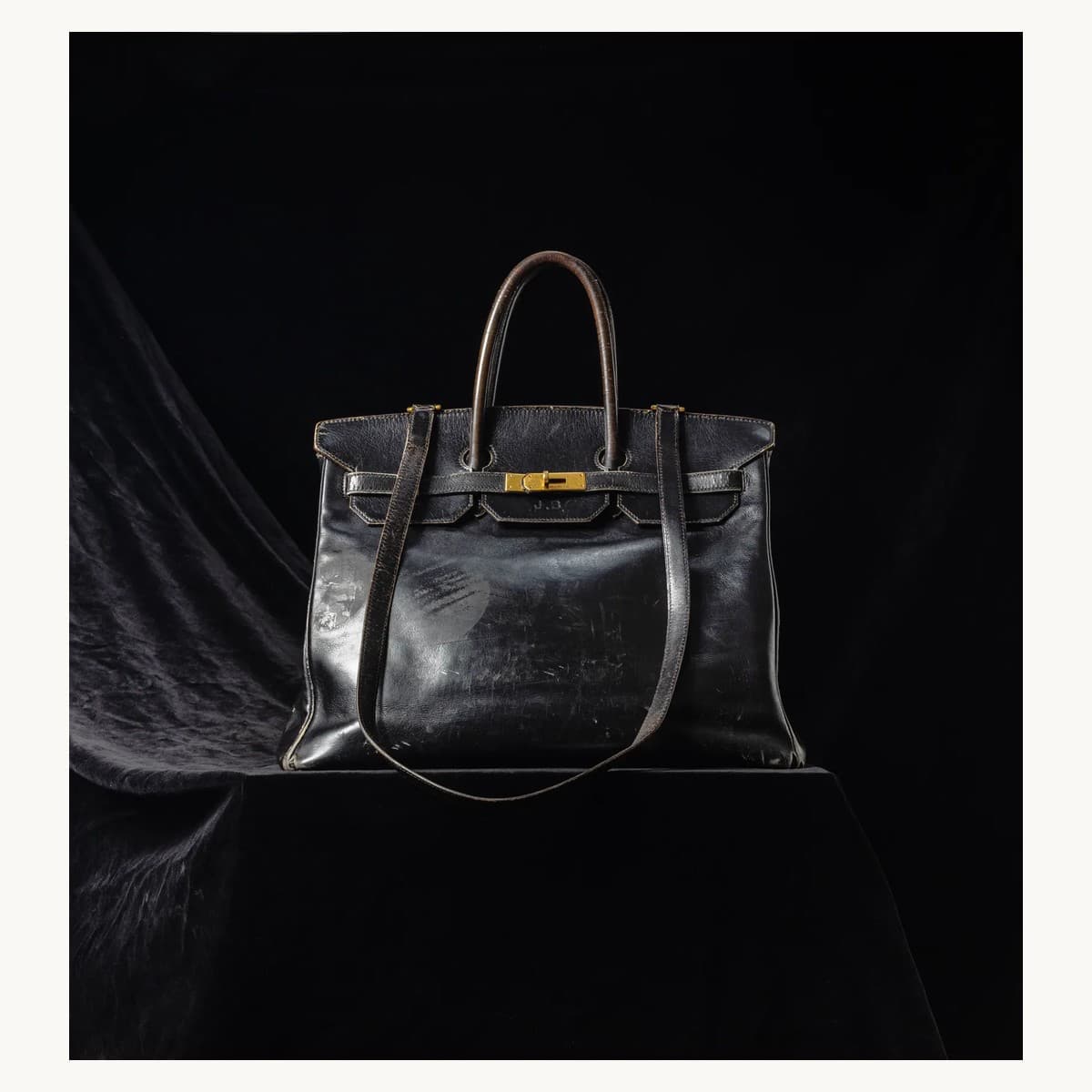
The original Birkin is the strongest visual proof that “lived-in” and “luxury” are not opposites. Source: Vogue / Sotheby's.
That detail is the entire charm thesis in miniature. The world's most storied Birkin was not powerful because it looked untouched. It was powerful because it carried evidence of use, routine, travel, taste, and personality.
Why charms are back now
Bag charms are surging because they solve a problem luxury created for itself. After years of price increases, scarcity games, quiet luxury, and carefully preserved handbags, consumers want personality back. A neutral handbag may be elegant, but a decorated handbag says something specific about the person carrying it.
JOOR reported that Google search interest in bag charms rose 168% in the last year, Pinterest search interest grew 700%, and bag charm sales volume on JOOR reached 12x the previous year's levels in the first half of 2025 among like-for-like brands. That turns the trend from a social-media styling habit into a retail opportunity.
The RealReal's 2025 Resale Report points in the same direction from the resale side. Its “patina effect” section reported sales of fair-condition items up 32% year over year and bags showing visible wear up 45%. The cultural message is clear: untouched perfection still matters for investment-grade collecting, but visible life is becoming its own kind of status.
The best charm archetypes right now
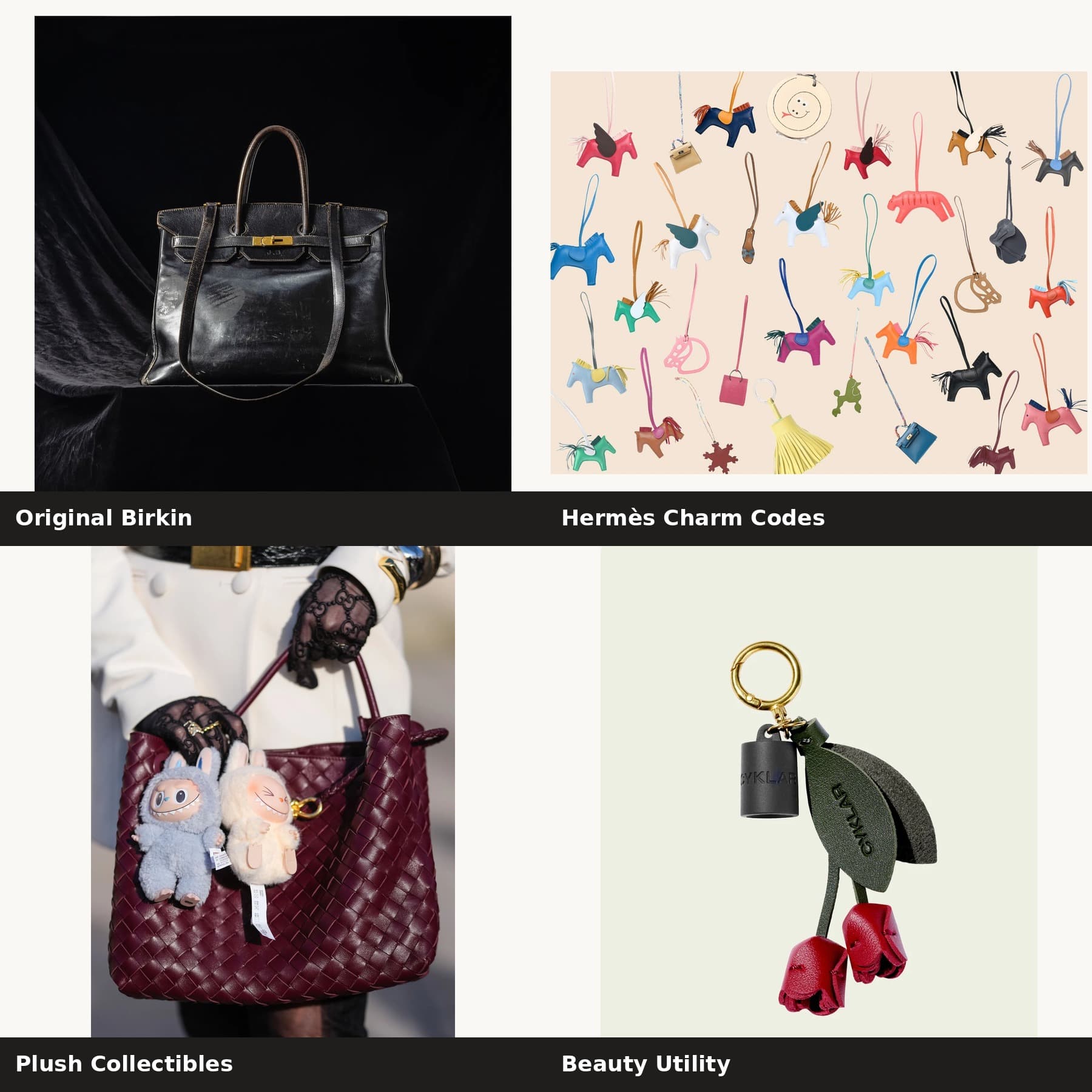
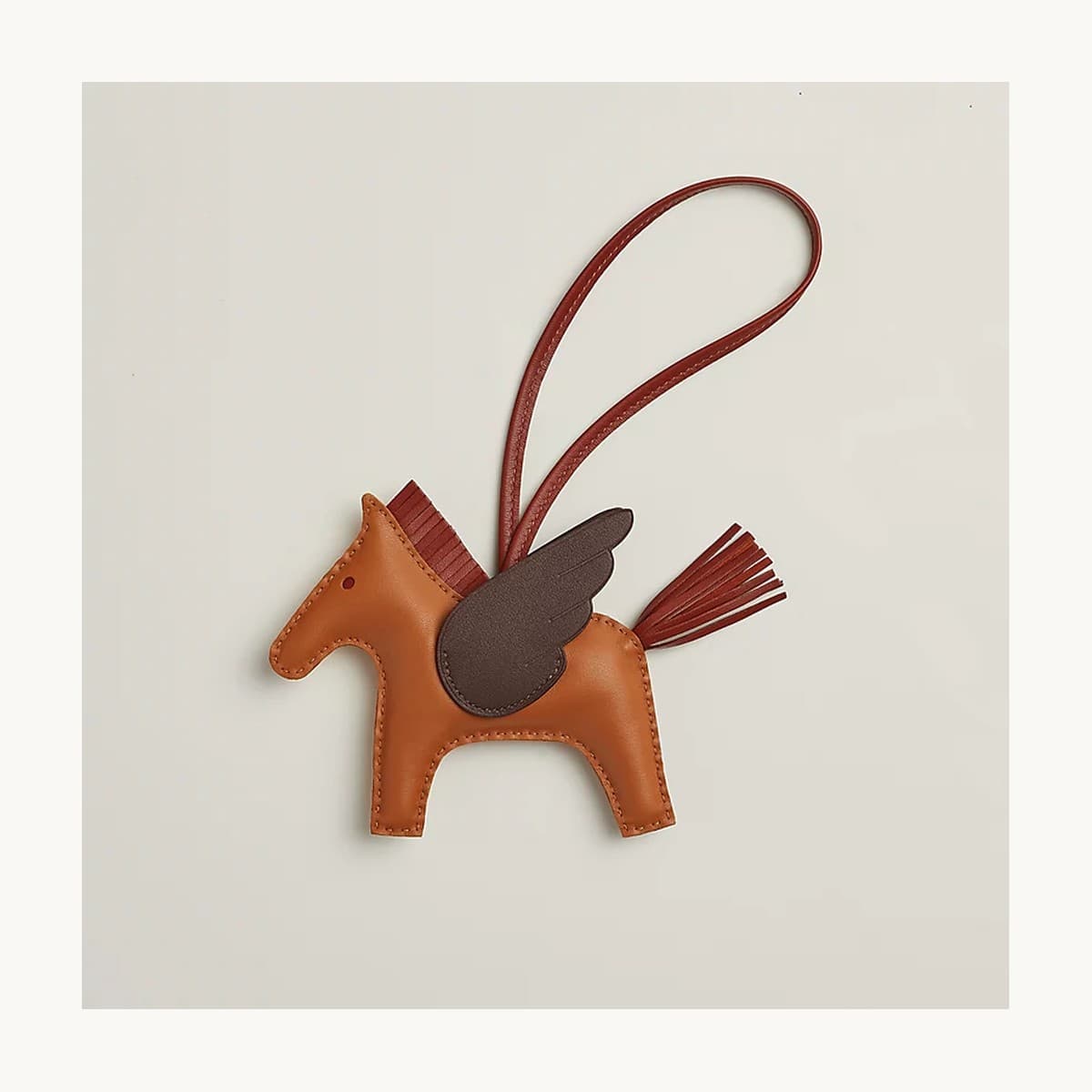
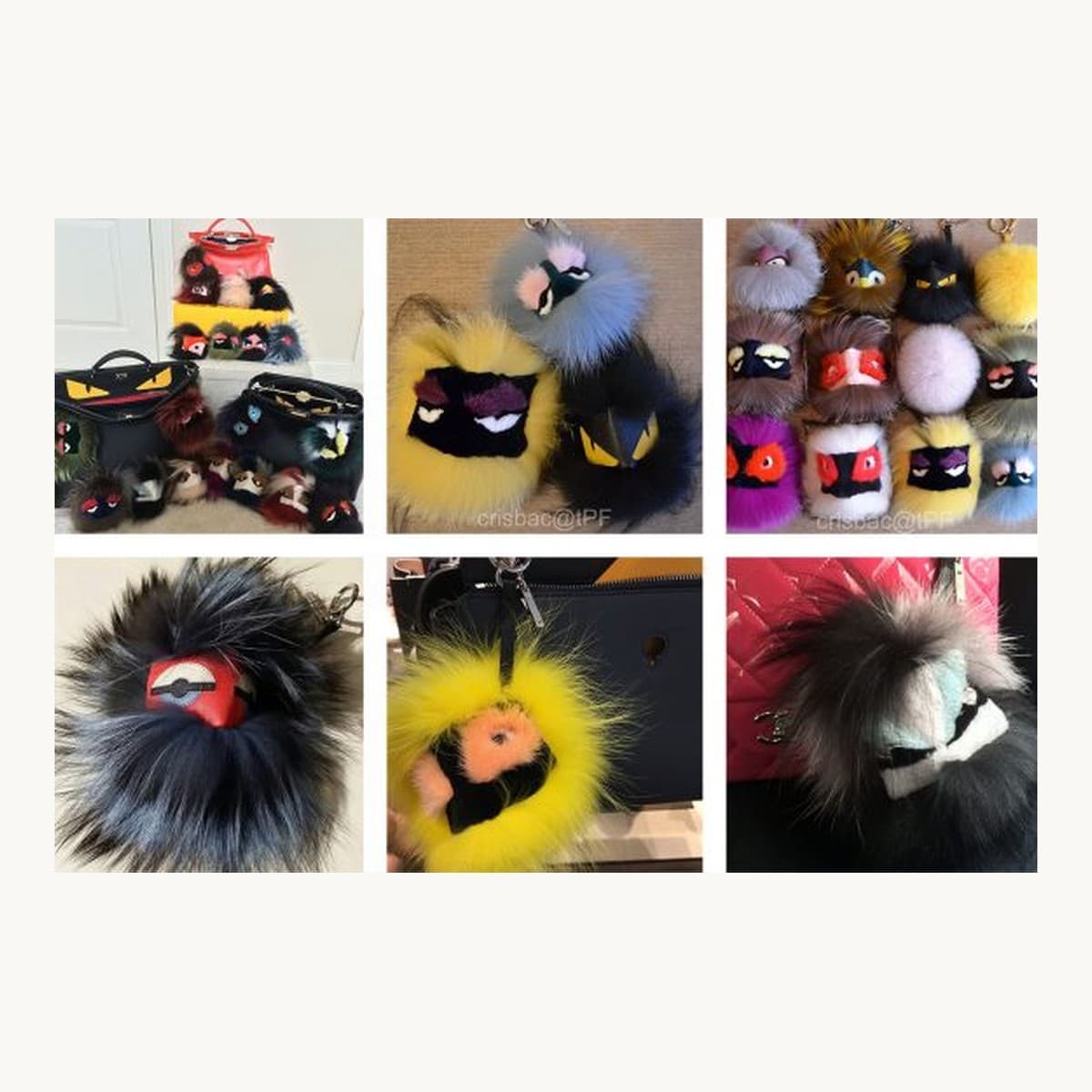
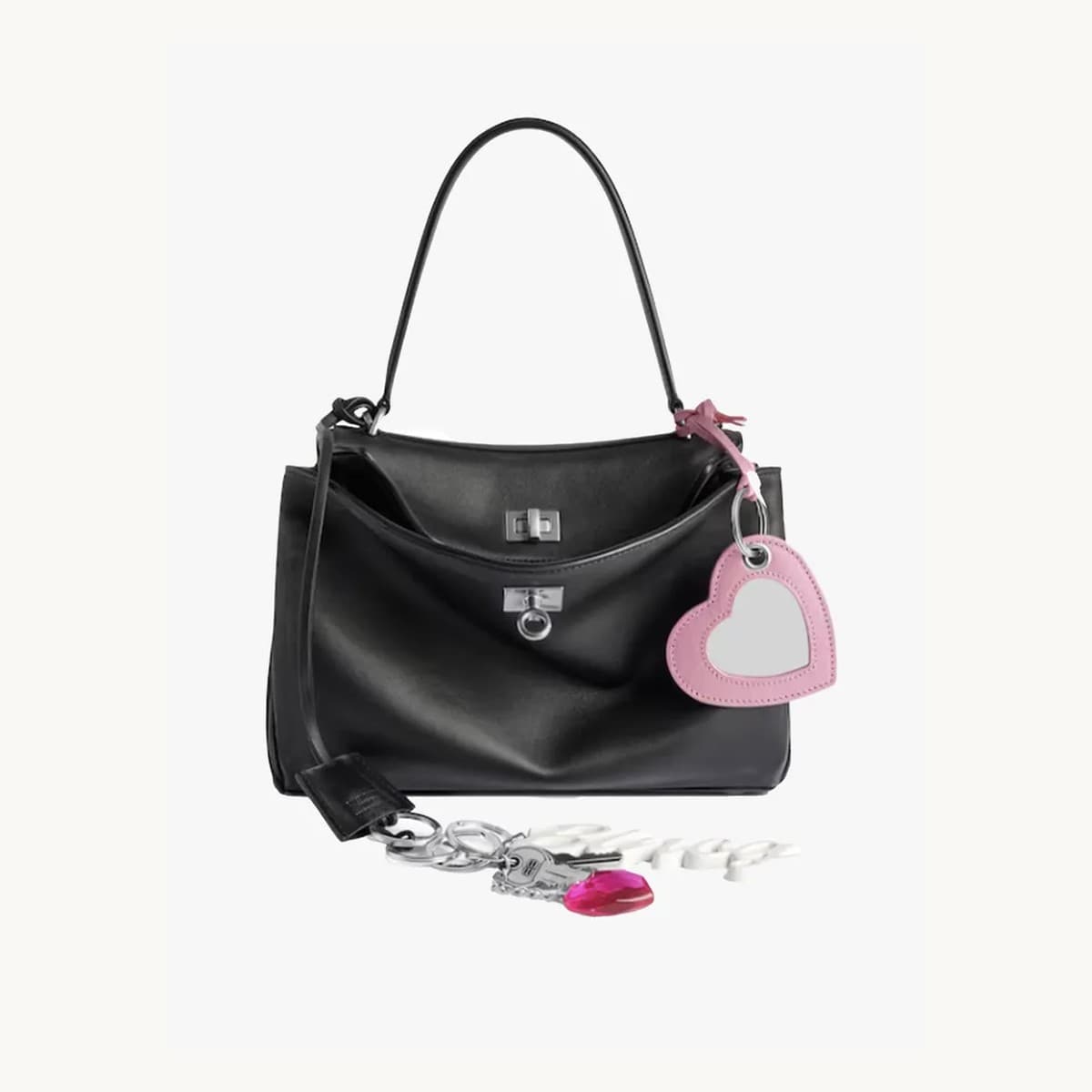
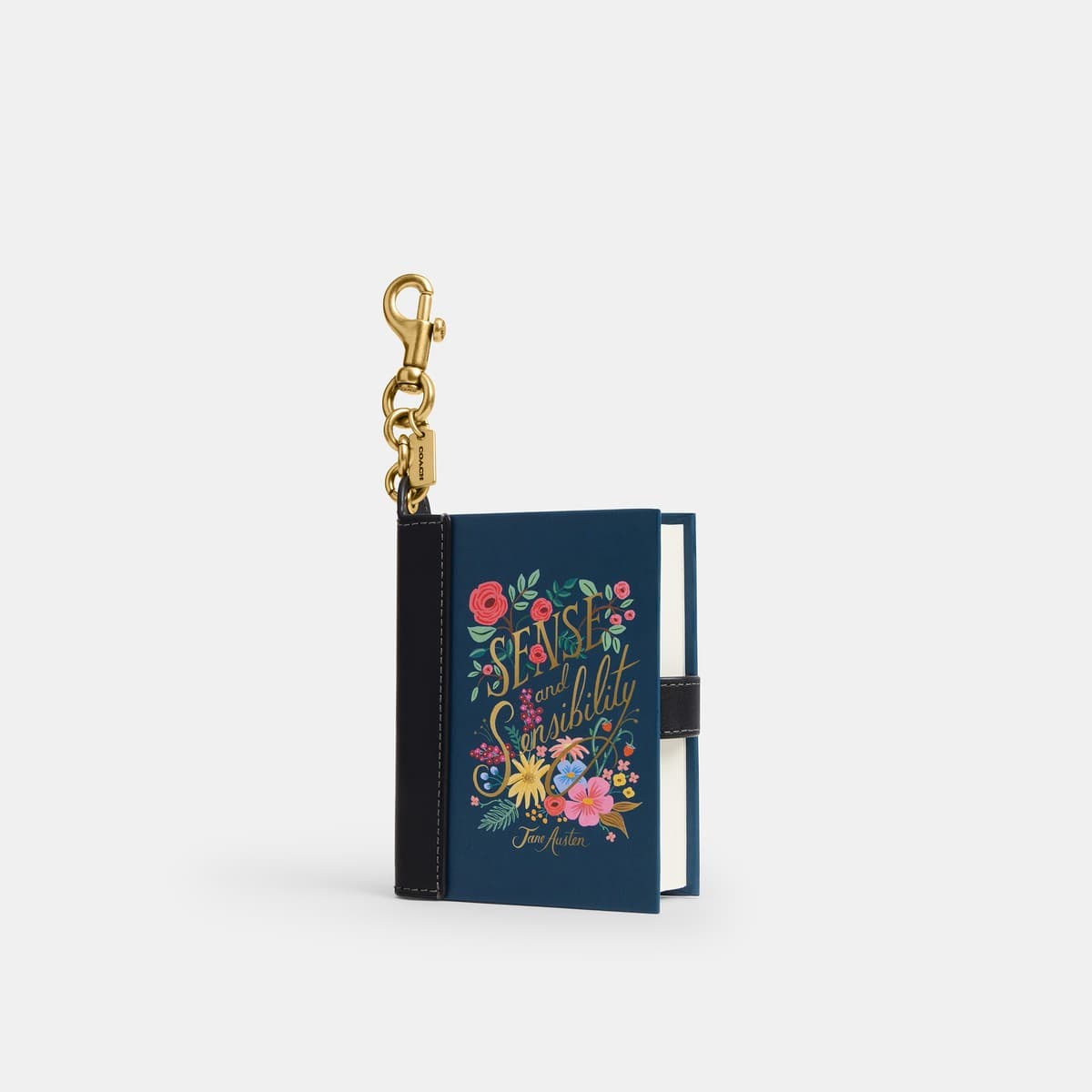
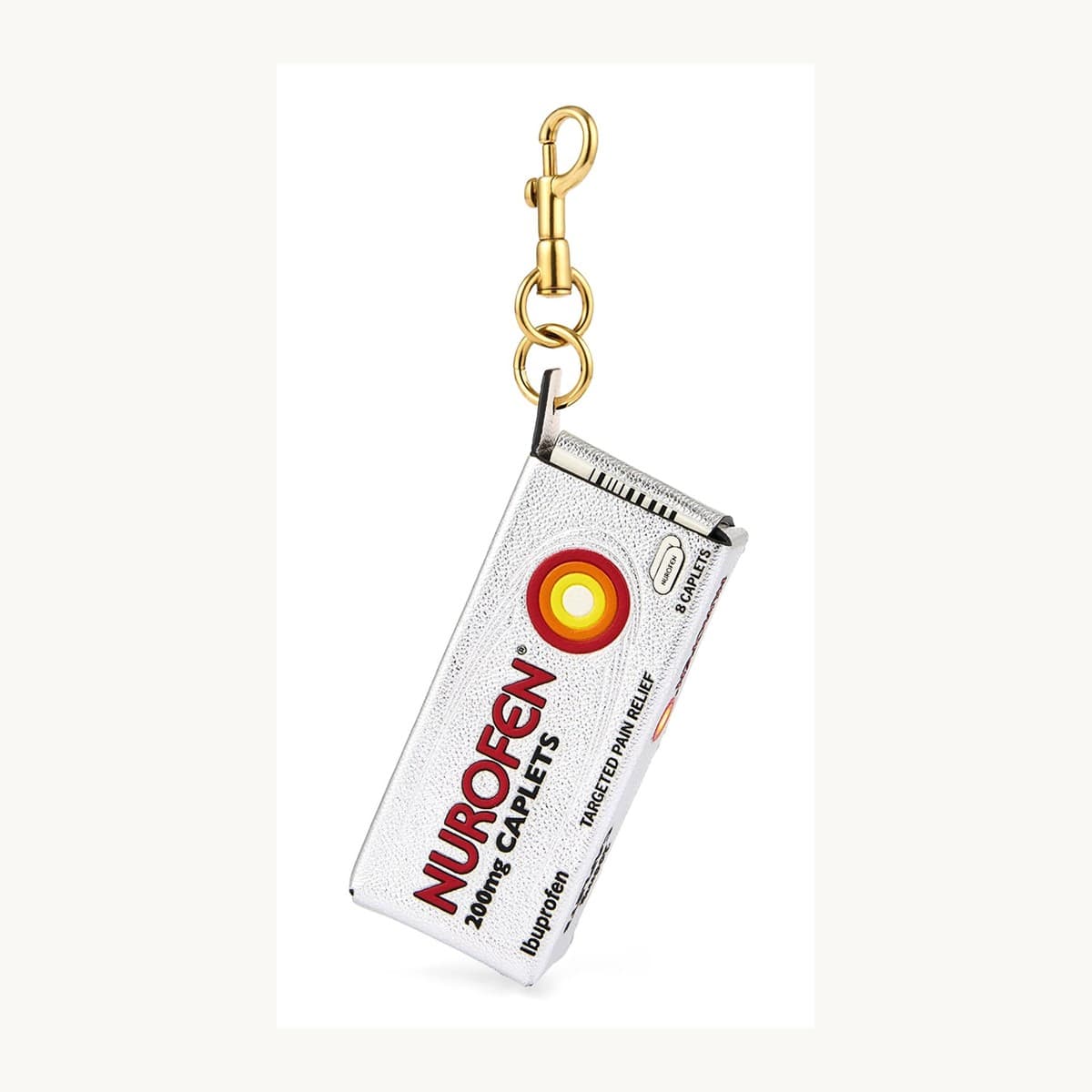
The strongest charm examples fall into distinct categories. Hermès Rodéo and Pégase charms represent the heritage-house approach: equestrian, logo-light, and designed to feel natural on a Birkin or Kelly. Fendi Bag Bugs represent the monster-maximalist approach, turning humor and texture into a luxury category. Labubu and plush collectibles bring toy culture into high fashion. Beauty charms make utility cute. Coach's readable book charms make a bag carry an identity cue. Anya Hindmarch's product charms turn ordinary supermarket and pharmacy objects into collectible leather jokes.
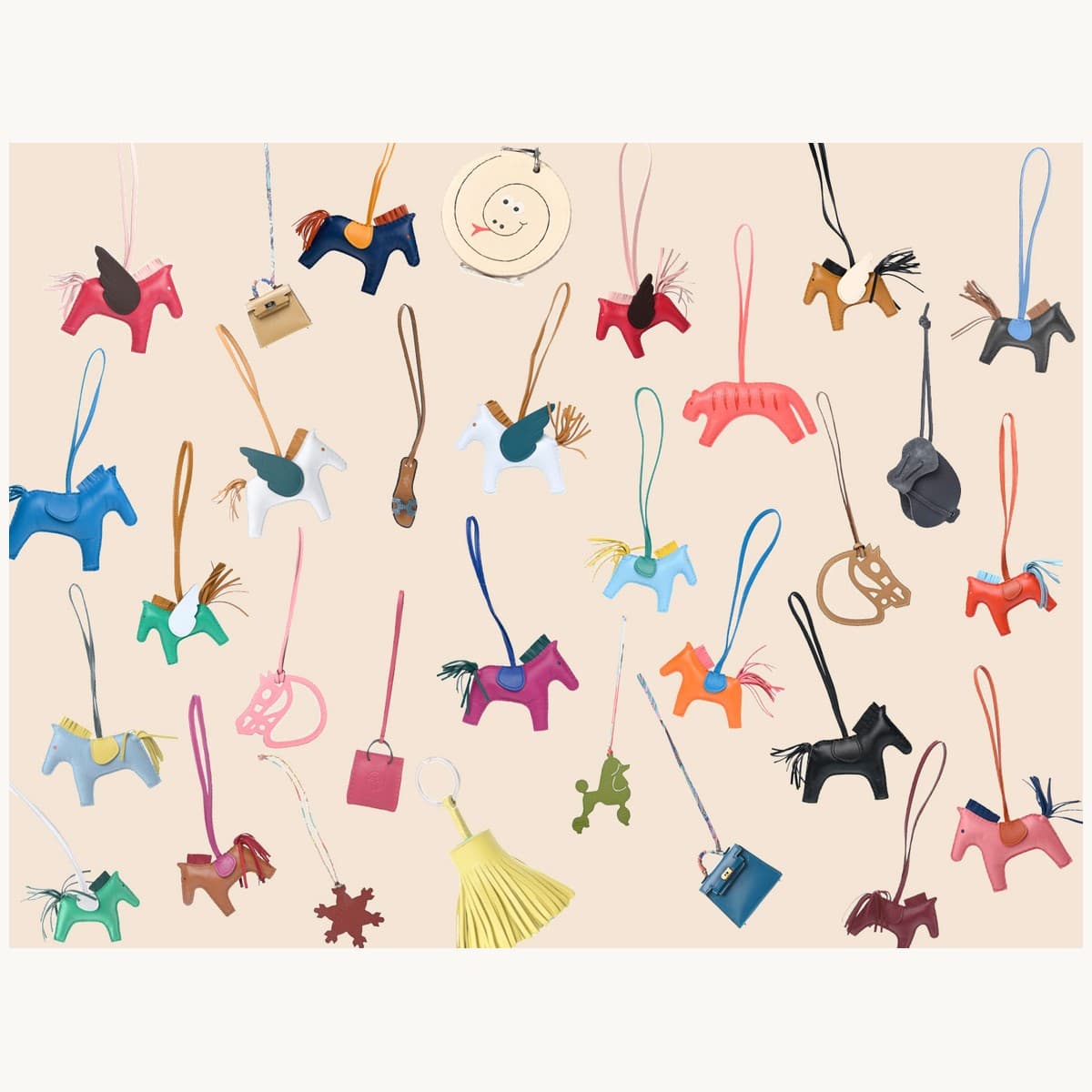
Hermès charm codes make the trend feel archival rather than purely viral. Source: PurseBlog.
This range is why the trend feels bigger than one aesthetic. A charm can be polished, childish, ironic, functional, precious, literary, nostalgic, or surreal. The shared behavior is not “add something cute.” The shared behavior is “make the bag legible as mine.”
Fendi made the tiny monster a luxury category
Fendi's Bag Bugs are essential to the charm timeline because they showed that a small, intentionally strange object could become a luxury collectible. PurseBlog described Bag Bugs as more than handbag accessories, arguing that they helped start an entire category of luxury products. That history matters now because today's Labubus, plush keychains, and fuzzy trinkets are not a rejection of designer fashion; they are descendants of a category luxury helped create.
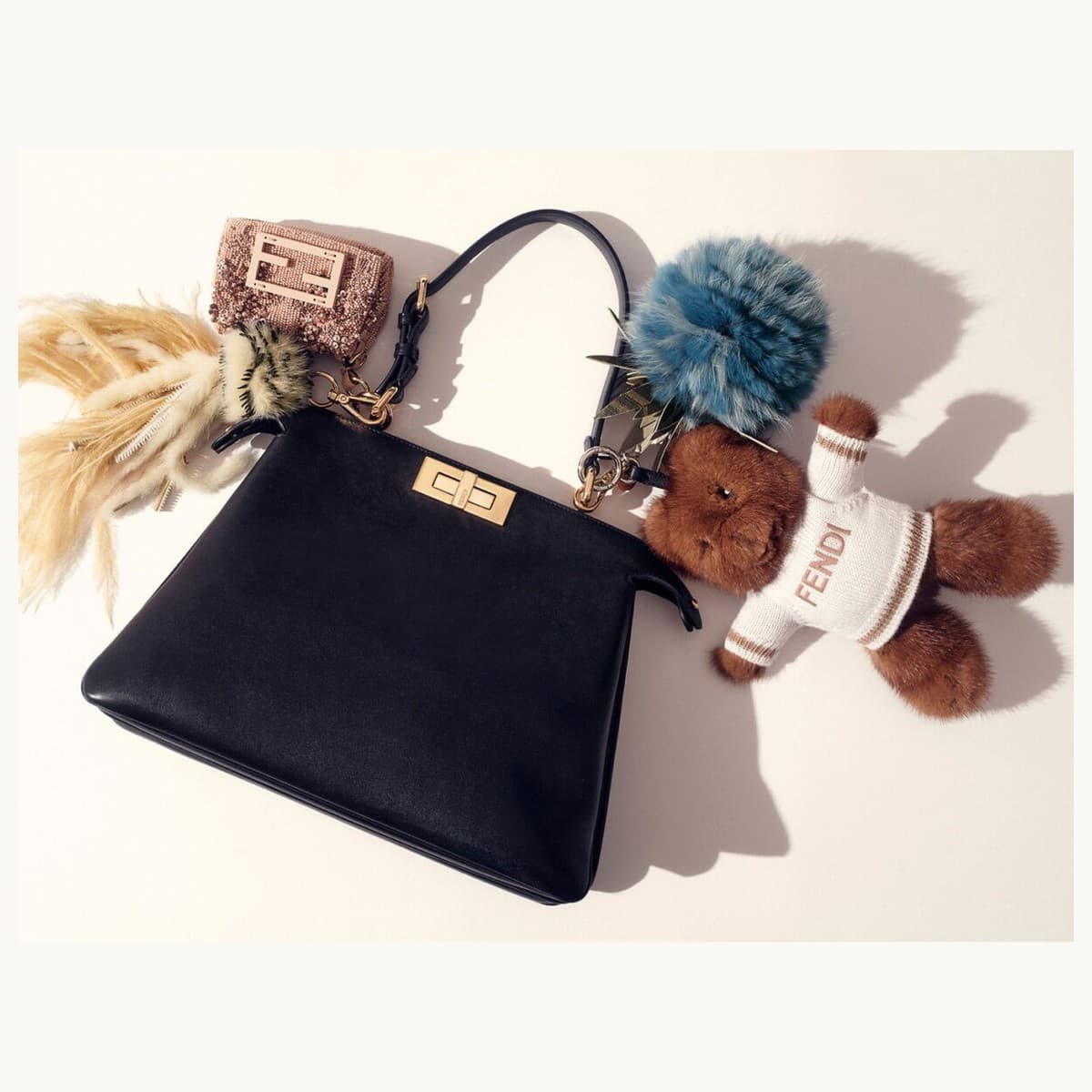
Fendi's charm language remains one of the clearest examples of luxury with humor, texture, and collectible energy. Source: PurseBlog.
Labubu and the ugly-cute luxury signal
Labubu is the most internet-native charm example in the current cycle. Vogue Arabia described Labubu as moving from niche to mainstream and appearing on luxury bags, while Vogue Business linked toy charms to chaotic customization and the desire to show personality without investing in another expensive luxury item. The point is not that plush toys have become elegant. The point is that taste is being performed through contrast: a serious bag plus an unserious object.
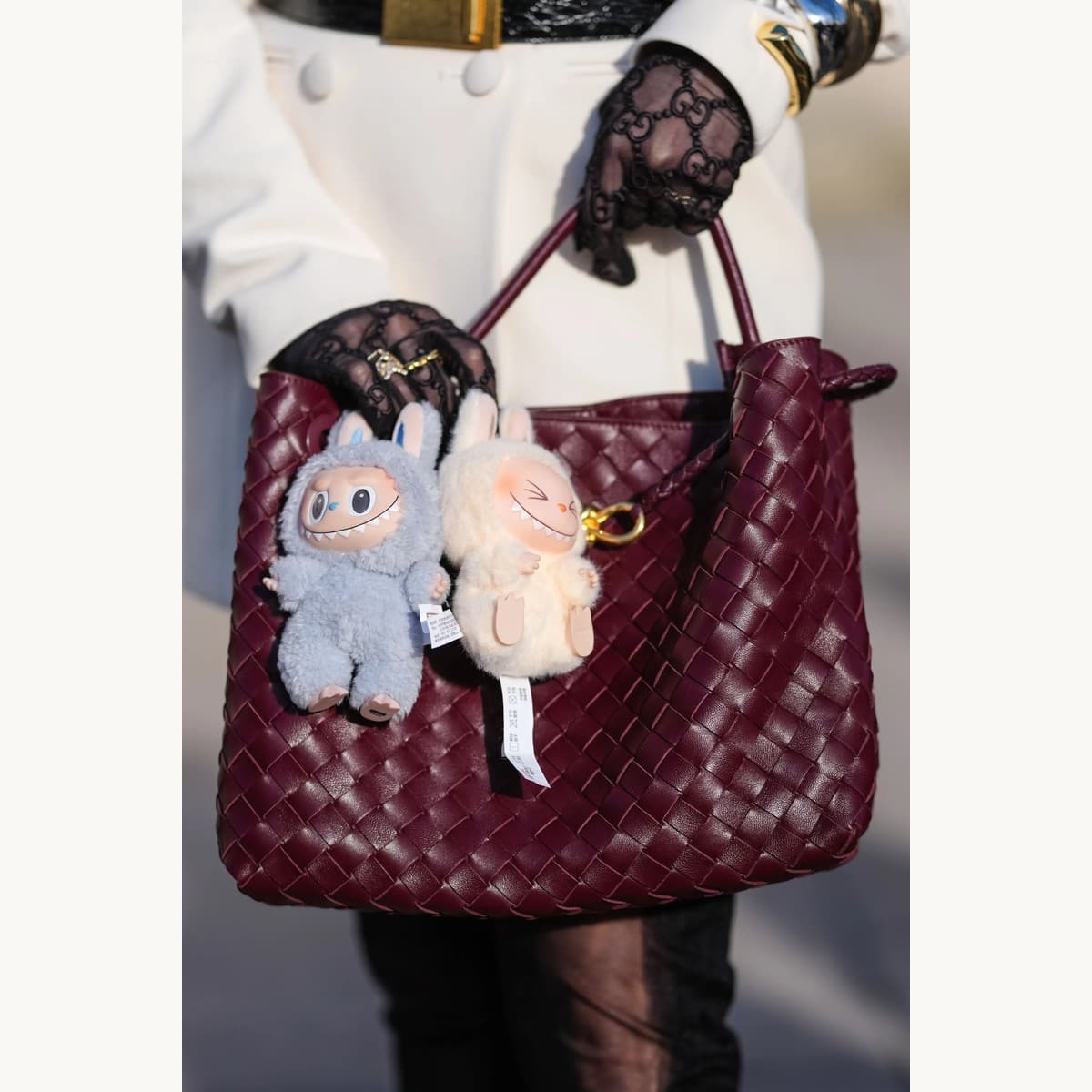
Labubu-style plush charms work because they interrupt polish with collectible, slightly chaotic personality. Source: Vogue Arabia.
Beauty charms turn decoration into utility
The newest version of the trend is not only decorative. Beauty charms turn lip balm, fragrance, hand sanitizer, mirrors, and mini hair products into objects meant to be seen. ELLE's recent coverage traced the beauty-bag-charm wave to purse-charm history, while Glossy reported on beauty brands using charms and holders to make products more portable and visible.
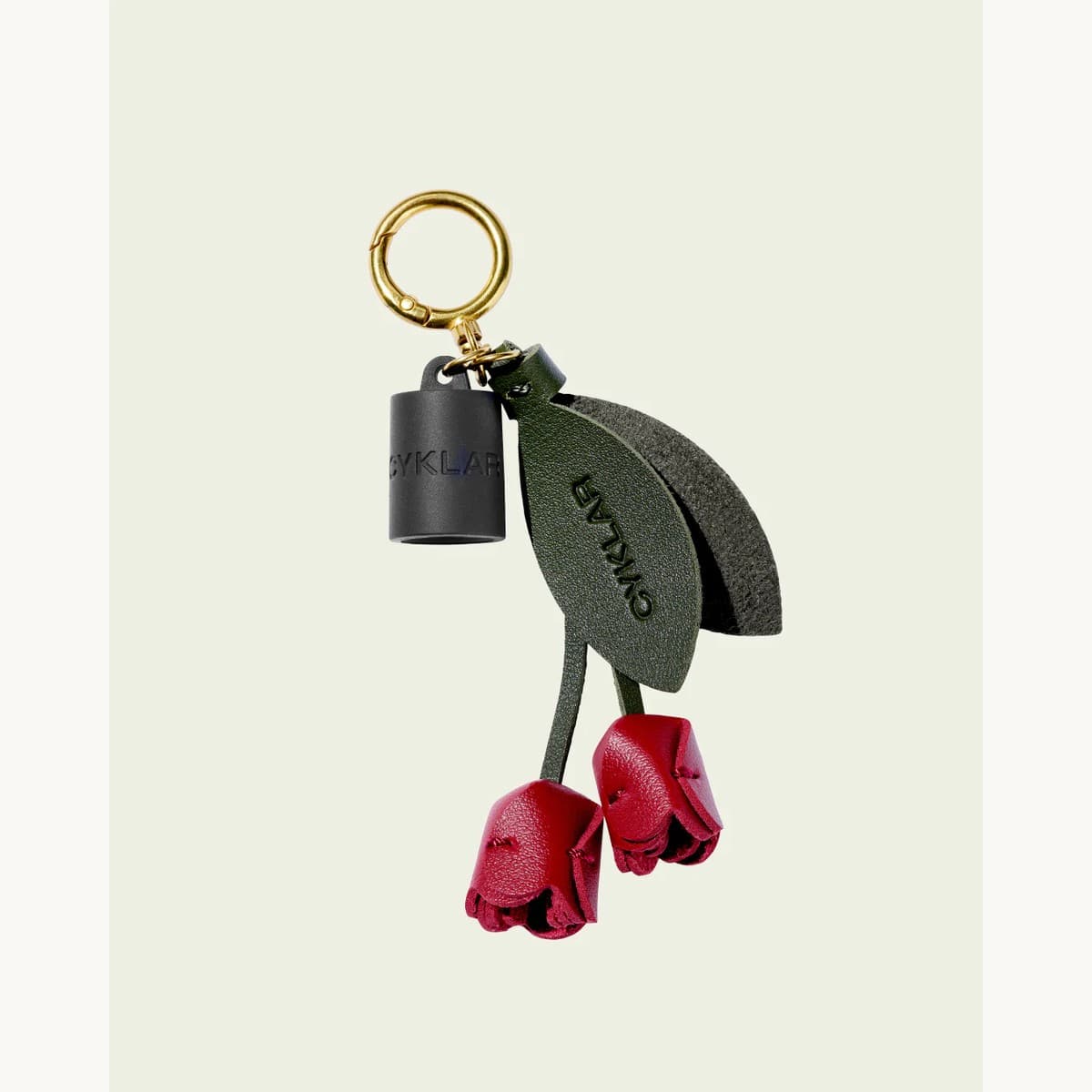
The best examples are deliberately specific: a Cyklar perfume-oil charm that lets scent hang from a bag, a TONYMOLY banana lip balm that functions like a keychain, and Touchland x Crocs sanitizer cases that clip to bags, keys, or belts. Beauty is becoming part of the bag's exterior story.
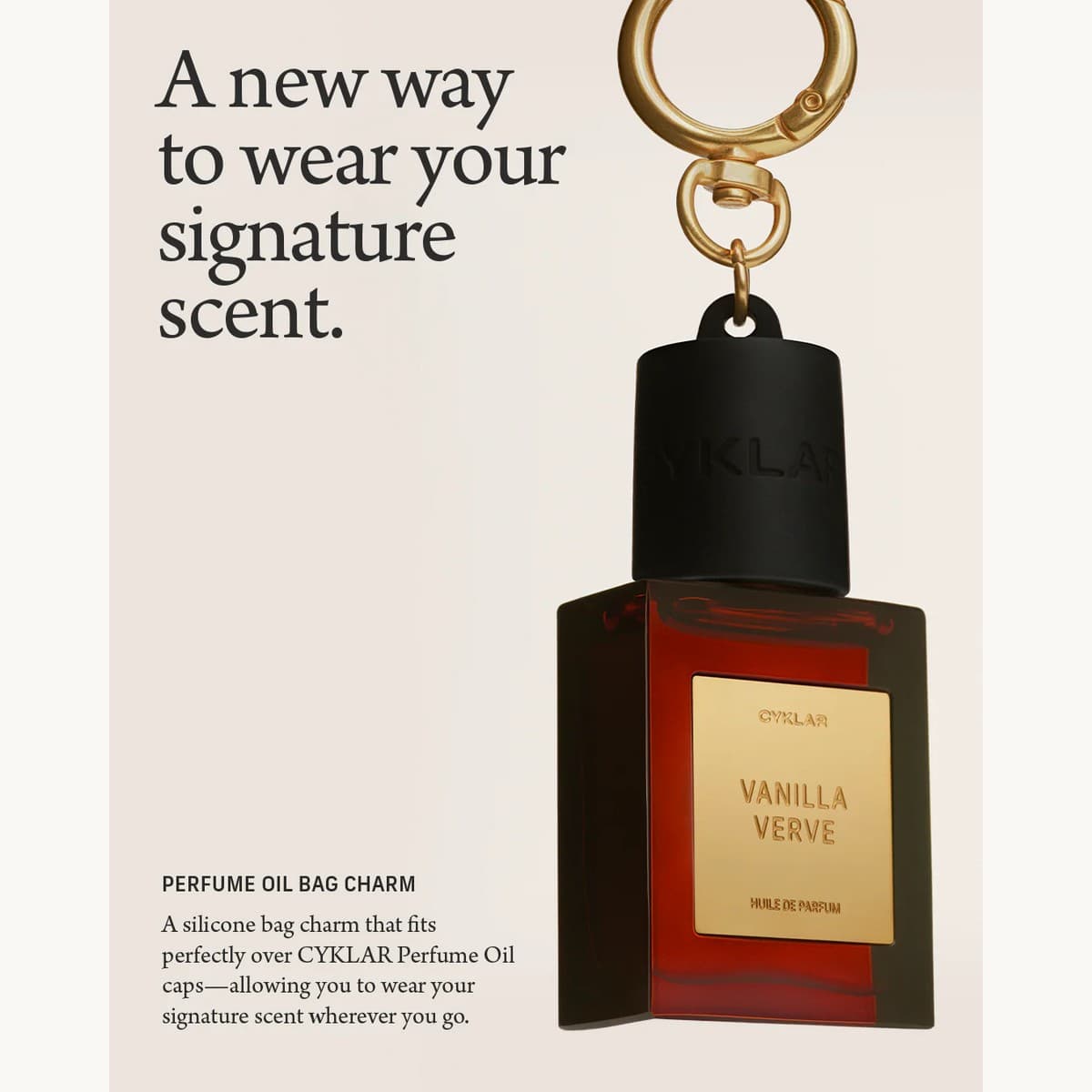
Beauty charms are the most practical version of the trend: the object decorates the bag and earns its place in the routine. Source: Cyklar.
How to charm a Birkin without cheapening it
The best charm styling has intention. It should not look like random clutter unless random clutter is the point. For a Birkin, the strongest approach is usually one of four formulas: heritage, talisman, utility, or maximalist collage.
A heritage formula pairs a Birkin with a Rodéo, Pégase, twilly, or leather house-code charm. A talisman formula adds one sentimental object: a vintage keychain, initials, zodiac charm, or small object connected to travel or family. A utility formula uses something functional, such as a mirror, perfume, lip balm, or sanitizer case. A maximalist collage layers plush, beads, scarves, and trinkets into a deliberately Jane Birkin-inspired system.
The practical rule is simple: respect the leather. Heavy metal can scratch hardware. Dark dyed charms can transfer color to light leather. Oversized plush can overwhelm small Birkins. Exotic skins and delicate leathers deserve restraint. A twilly or soft loop can act as a protective layer between the charm and the handle.
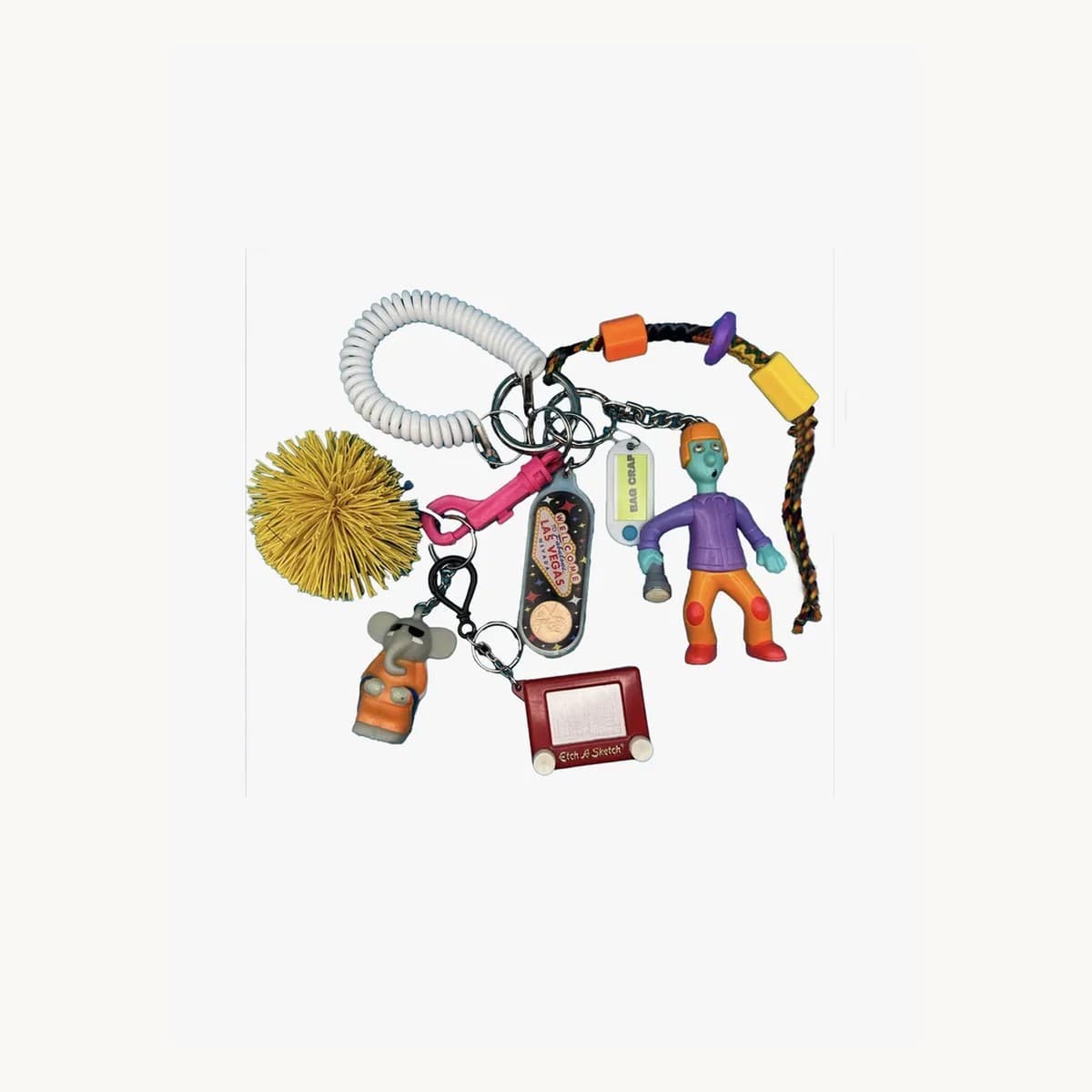
The “Birkinify” formula works best when the bag reads like a personal archive, not a random pile-on. Source: Vogue style reference.
The bigger meaning
The bag-charm comeback is really about control. Luxury brands control pricing. Boutiques control allocation. Resale platforms control authentication and market value. Algorithms control visibility. But charms let the owner control meaning.
That is why this trend feels so connected to Jane Birkin. The original spirit of the bag was not about financial performance or white-glove storage. It was about solving a real-life need for a chic, practical, capacious bag. Charms bring the Birkin back to human scale.
The most modern Birkin may not be the quietest one. It may be the one with a point of view.
Twelve examples that make the trend feel fresh
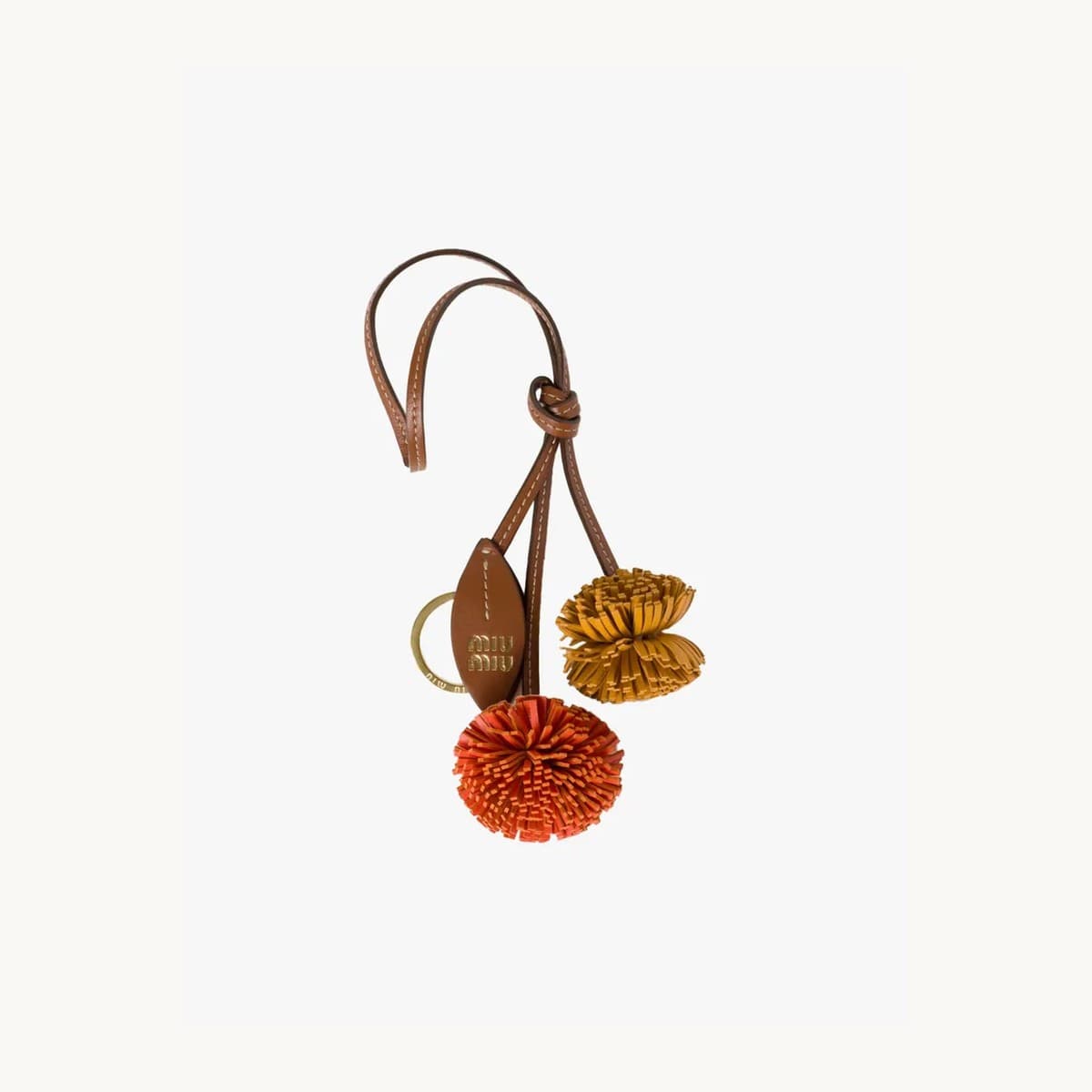
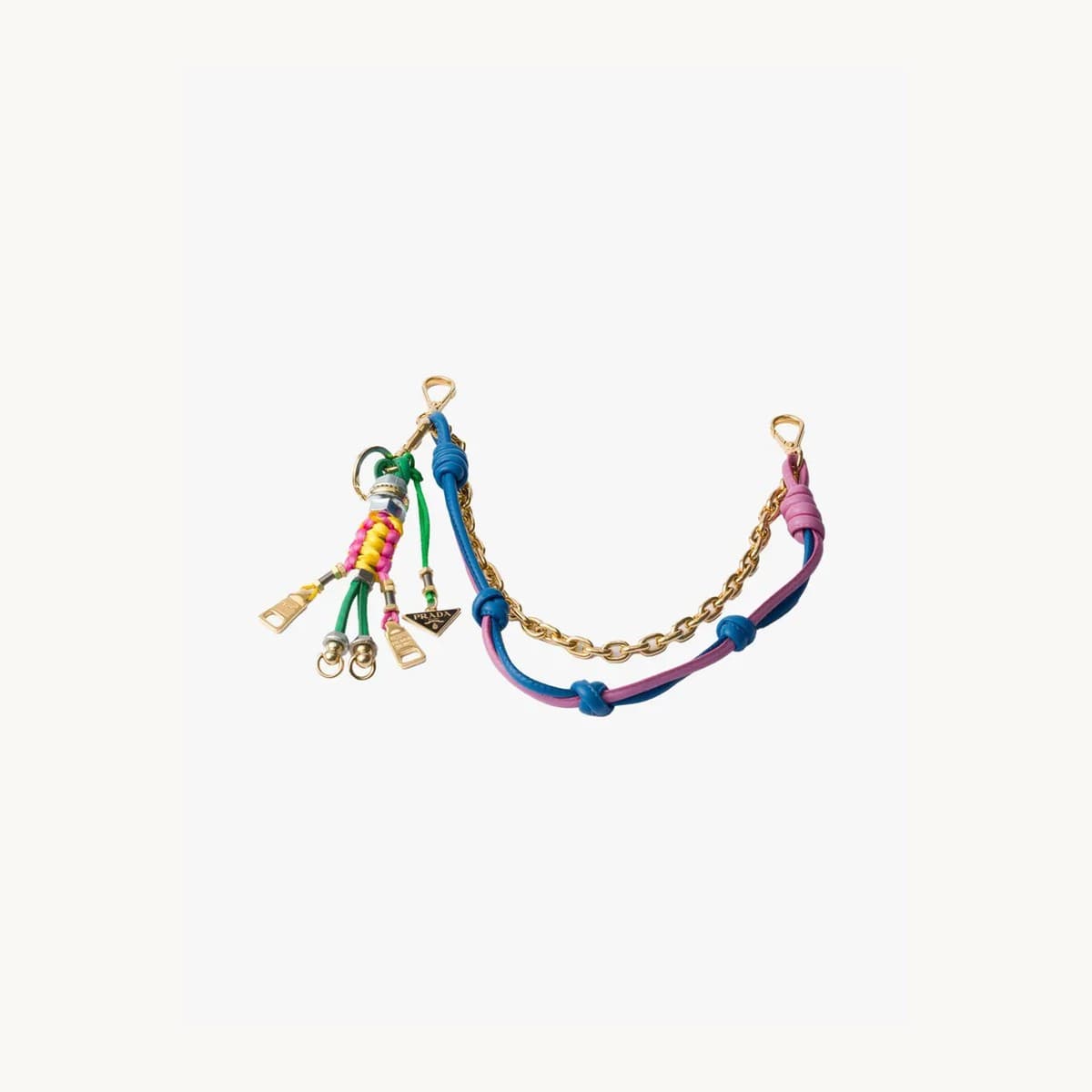
Use this as the visual anchor for the article. It shows the full charm spectrum: archive Hermès, monster luxury, toy culture, beauty utility, bookish identity, surreal product nostalgia, and jewelry-like tokens.
Charm styling formulas
A quick reference for pairing charms with a Birkin, Kelly, or any investment handbag.
| Formula | Best examples | Works best on | Editorial note |
|---|---|---|---|
| Heritage Hermès | Rodéo, Pégase, Twilly, leather animal charms | Birkin/Kelly in neutral colors | Safest for collectors; still personal but brand-coherent. |
| Beauty utility | Perfume oil, lip balm, hand sanitizer, mirror | Daily bags, totes, casual Birkins | Strongest “function plus fashion” angle. |
| Toy collectible | Labubu, plush animals, stuffed charms | Oversized bags, travel bags, relaxed looks | Best for contrast: serious bag plus unserious object. |
| Surreal product | Anya Hindmarch Carmex/Nurofen, food packaging, pharmacy references | Minimal bags that need wit | Adds humor without looking juvenile. |
| Literary identity | Coach readable book charms, mini notebooks | Coach, totes, structured top-handle bags | Turns the bag into a conversation starter. |
| Jewelry object | Alighieri, chains, hearts, cherries, enamel strands | Evening bags, top handles, small shoulder bags | Elevates rather than disrupts. |
| Chaotic archive | Beads, keys, scarf, plush, charms collected over time | Slouchy bags, travel-worn luxury, vintage Birkins | Closest to the Jane Birkin spirit. |

